The Mobile Wallet is Your App's Best Friend
Many brands are heavily invested in their mobile app, but apps only reach customers willing to download. Branded passes in Apple and Google Wallets provide a frictionless entry point to more in-depth mobile engagement.
.png)
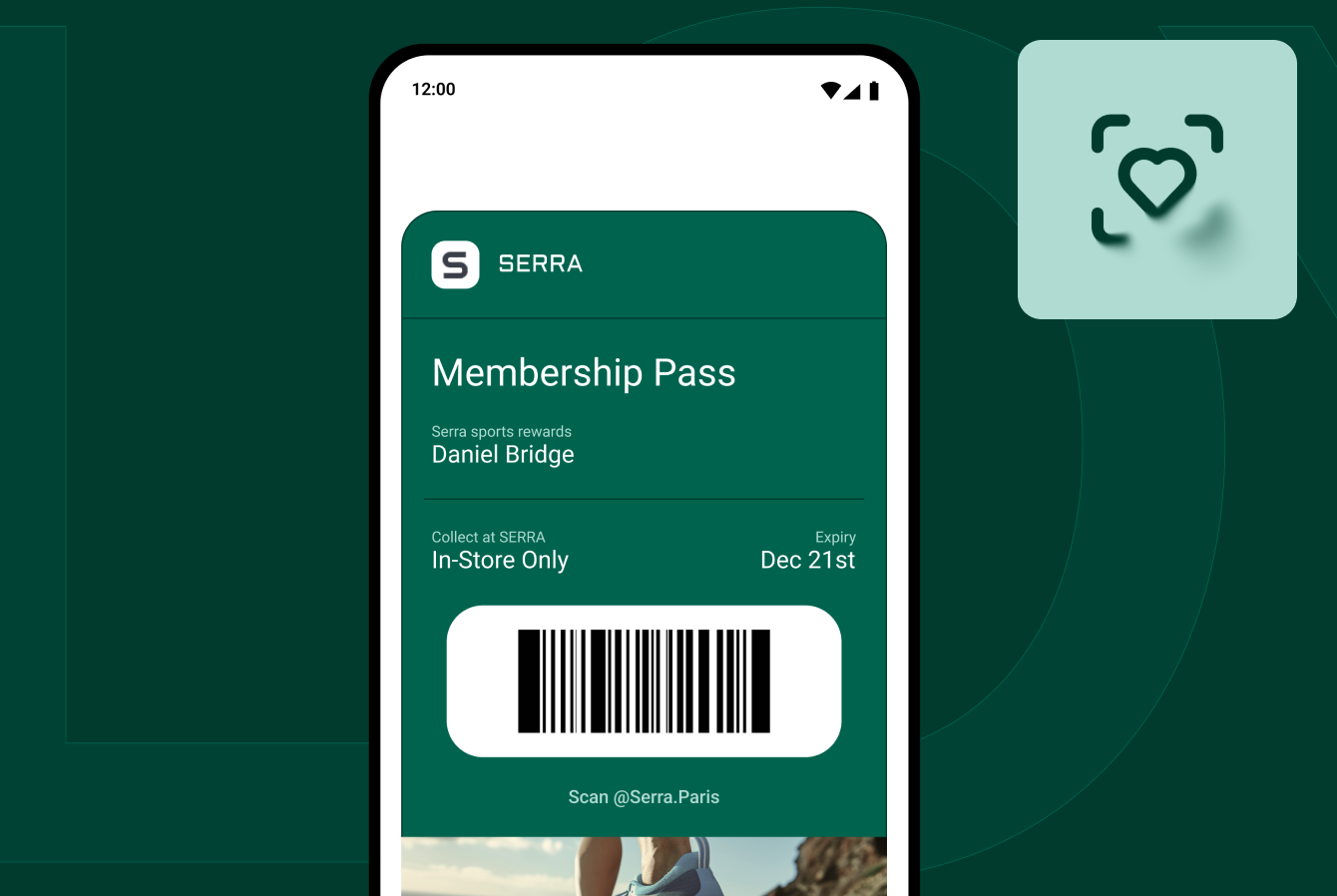
Brands have spent years building mobile apps, and for good reason. Apps are powerful, driving transactions and rich experiences for highly engaged customers.
But apps have a reach problem. No matter how good your app is, it only works for customers willing to download it. That's a significant barrier that leaves a large pool of interested customers disconnected from your brand.
Mobile wallets close that gap.
Apple Wallet and Google Wallet give brands a persistent, dynamic surface on customers' phones that requires no app download, no login, and no friction. The wallet goes wide, while the app goes deep. Together, they form the architecture for modern mobile engagement.
Why Brands Are Missing More than Half Their Customers
Researchers describe them as "silent loyalists," the 53% of consumers who are genuinely interested in a brand but don't want a deep relationship with it. They shop consistently and respond to offers, but are resistent to downloading apps.
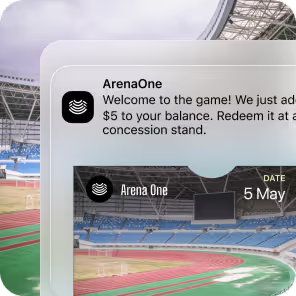
Now there is another option. A customer at checkout can add a pass to their Apple or Google Wallet in a single tap or scan. This frictionless adoption turns a passive customer into a connected one, adding a branded pass to their phone that receives real-time notifications, updates automatically, and triggers lock-screen reminders based on location or behavior.
You can think of the wallet as your mobile top of funnel, attracting a large segment of customers and creating a surface to drive engagement and high-value actions.
The data makes the case for acting now:
— Customers with a brand's card in their mobile wallet spend an average of 31% more than those using traditional payment methods
— 36% of consumers say a frustrating mobile experience is enough to make them choose a different brand
How a Wallet-Plus-App Stack Works in Practice
The architecture is straightforward. The wallet sits at the top of the funnel with broad reach, low-barrier enrollment, and a direct line to the lock screen. The app sits deeper in the funnel, where customers who are ready for a richer experience can go further.
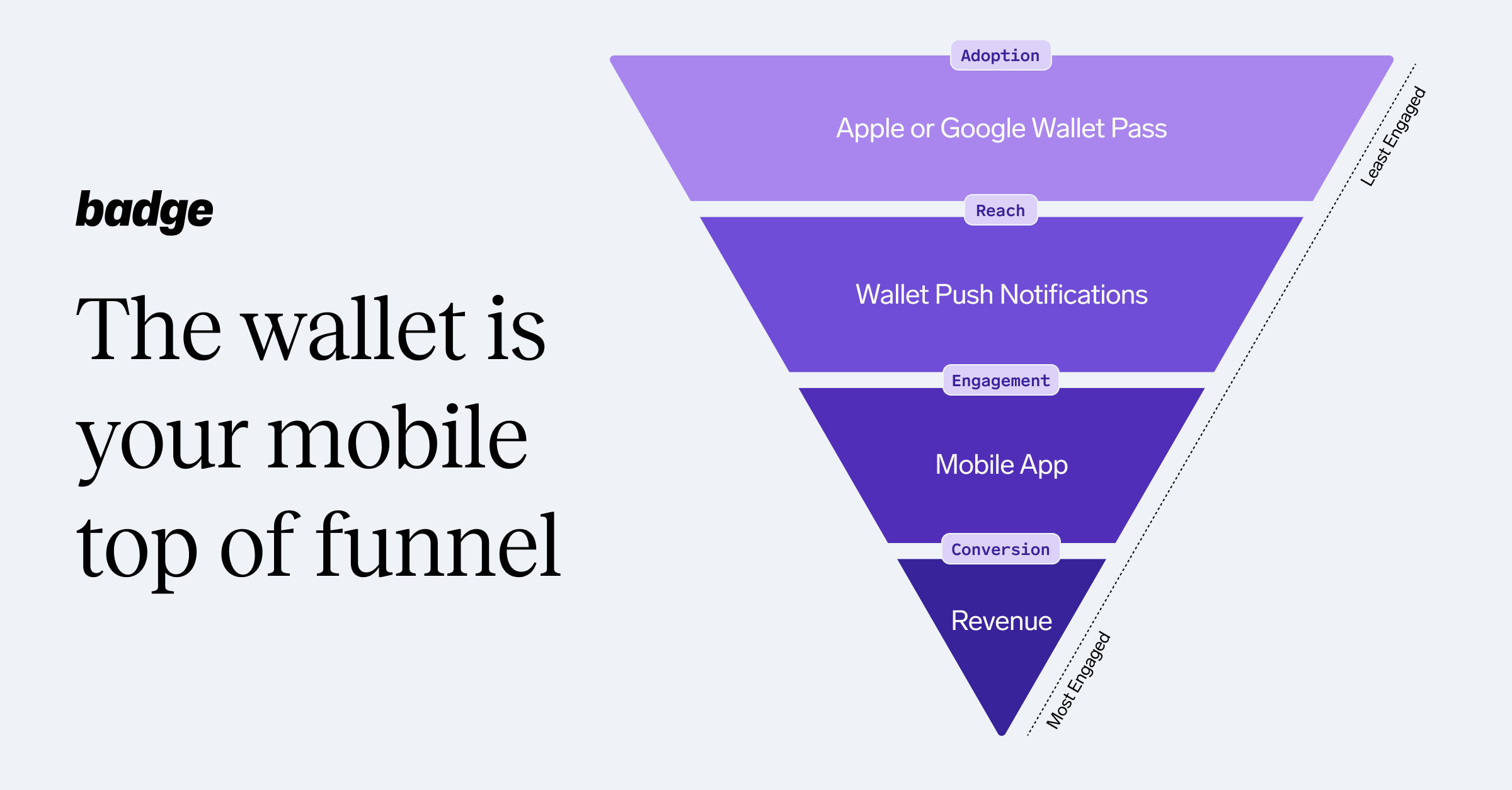
For the passive customer, the wallet creates a relationship without demanding too much. A meaningful share of customers want to engage lightly, with a quick tap to earn or redeem. The wallet handles this gracefully, bringing customers inside your ecosystem while meeting them where they are.
For the more highly engaged customer, the app earns its place. It's built for the moments that require more: ordering ahead, tracking a purchase, and accessing past purchases.
The wallet captures the broad base, while the app serves the power user.
The Wallet as a Gateway to Deeper Engagement
Your customers are already in wallets. Over 5.2 billion people globally use digital wallets, with wallets accounting for more than 60% of global e-commerce transactions. In the U.S. alone, over 31% of consumers have recently used a digital wallet in-store and usage continues to grow year over year.
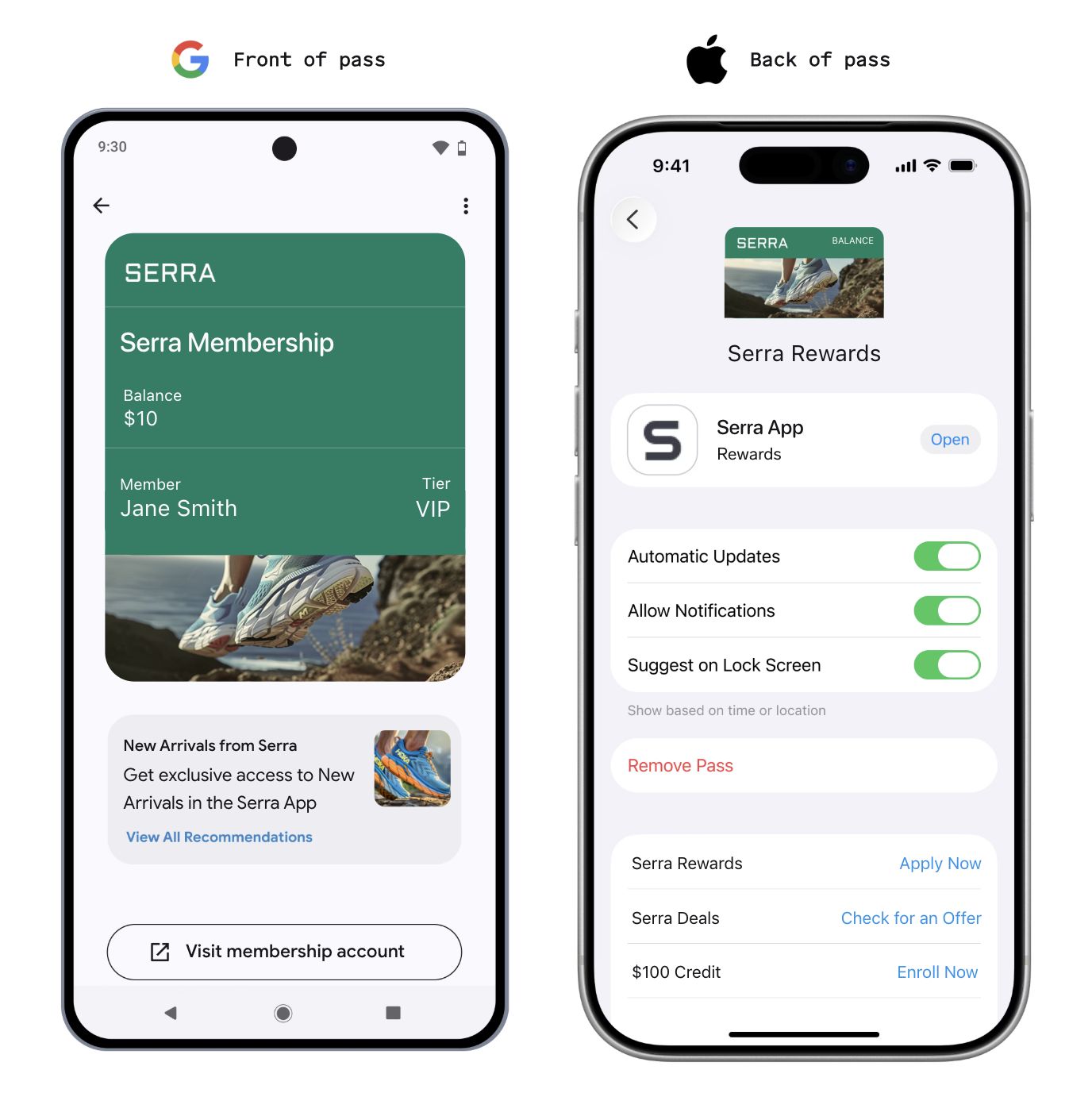
Connect with your customers directly in wallets by issuing a branded, dynamic pass. The wallet pass creates a persistent surface where you can deliver real time updates, contextual offers, geofenced messages, and push notifications to the lock screen.
Deep link from your mobile wallet pass to your mobile app, creating a journey that works for customers who might want to ease into a highly engaged mobile relationship.
Understanding this shift is central to rethinking how mobile engagement works across the full customer lifecycle.
How Badge Powers Customer Experiences in Apple and Google Wallet
Badge is the mobile wallet platform built for scale.
For marketers, Badge provides a no-code builder that lets you design fully branded loyalty cards, issue passes at scale, and run push notification campaigns without any developer lift. You can trigger lock-screen notifications by time, location, or user behavior. You can update pass content in real time as point balances change or new offers become available. You can connect your CRM or POS to keep wallet data consistent everywhere. Mobile wallet loyalty programs built on Badge give teams full control over the engagement surface without waiting on engineering resources.
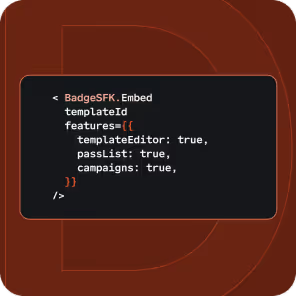
For developers, Badge provides a unified API layer across Apple Wallet and Google Wallet, designed for consistent behavior at scale. Pass creation, updates, and push notifications are all available through clean REST endpoints with real-world documentation. Teams that need to trigger wallet experiences from backend systems, connect live data sources, or embed Badge into an existing platform as a white-label solution can do all of it through the API.
The platform is backed by Stripe, Synchrony, and top-tier fintech investors.
Badge handles the wallet infrastructure, enabling brands to:
— Issue passes to Apple and Google Wallets that stay visible and active between purchase cycles
— Send geo-triggered push notifications when customers are near a store
— Automatically update points balances, tier status, and expiring offer reminders
— Track activations, redemptions, and visits to measure campaign performance
The Mobile Stack Built for Every Customer
The mobile wallet goes wide, with broad reach, zero friction, persistent visibility, and a direct line to every customer who taps "Add to Wallet."
The app goes deep, where highly engaged customers make purchases, order ahead, and check order status.
If your mobile stack doesn't include a wallet layer yet, you're leaving adoption, engagement, and revenue on the table.
👉 Talk to our team to see how Badge can help.
FAQs
What is the difference between a mobile wallet pass and a branded app for loyalty?
A branded app is a depth tool. It serves high-value customers who want to order ahead, move through loyalty tiers, and engage with personalized content. A mobile wallet pass is a reach tool. It gives the broader base of loyal customers a persistent, lock-screen presence without requiring a download or login. Both serve different segments, and the strongest loyalty programs use both.
Why are mobile wallets better than email for loyalty engagement?
Mobile wallet push notifications are opt-in by default when a customer installs a pass. They appear directly on the lock screen and can be triggered by location, time, or behavior. Email campaigns compete with crowded inboxes and are easy to miss. Wallet notifications reach customers at the right moment without requiring them to open anything.
Do mobile wallet passes work without a branded app?
Yes. Mobile wallet passes live inside Apple Wallet or Google Wallet natively. Customers add them with a single tap and receive push notifications, real-time updates, and geo-triggered alerts without any additional app installed. This is precisely what makes them effective for reaching the customers who will never download a branded app.
What data can brands track from mobile wallet loyalty passes?
With a platform like Badge, brands can track pass installations, redemptions, store visits, push notification engagement, and campaign performance across Apple Wallet and Google Wallet. This data connects to CRM and POS systems to keep loyalty metrics consistent across every touchpoint.
How does Badge make it easy to launch wallet-based loyalty programs?
Badge provides a no-code builder for marketers and a unified API for developers. Marketers can design branded loyalty cards, send push campaigns, and update pass content in real time without any developer support. Developers can build pass creation, updates, and notifications directly into backend systems using clean REST endpoints. Both paths launch on the same infrastructure. You can read more about mobile wallet campaigns and the use cases Badge supports.
Can mobile wallet loyalty programs replace plastic loyalty cards?
Yes, and the results are measurable. Plastic cards are easy to lose and go unused at checkout. Mobile wallet loyalty cards live on the lock screen, update automatically, and send reminders when rewards are about to expire. Brands that make the switch see higher redemption rates, stronger retention, and a direct engagement channel they didn't have before.